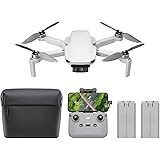
Understanding the intricate workings of a drone, known officially as a Remotely Piloted Aircraft System (RPAS), is widely considered a foundational element for safe and effective operation. In fact, regulatory bodies like Transport Canada emphasize this crucial understanding, expecting pilots to grasp an immense amount of detail concerning RPAS components. As illuminated in the accompanying video, delving into these systems can significantly reduce flight problems and enhance a pilot’s ability to address issues should they arise mid-flight.
This comprehensive guide complements the video by exploring the various subsystems that enable drones, particularly quadcopters and fixed-wing RPAS, to perform their aerial tasks. By gaining insight into each component, from the ground control station to the smallest sensor, pilots can achieve a deeper appreciation for their aircraft and operate with greater confidence and proficiency. The complex dance between hardware and software is critical for maintaining stability and responsiveness in the air.
Laying the Groundwork: Terminology and the Control Hub
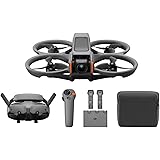
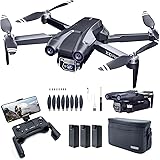
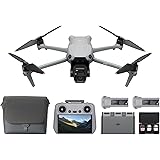
Before examining the mechanics of how drones work, it is important to establish a clear understanding of the common terminology used within the industry. In Canada, what is often called a drone is officially designated as an RPA, or Remotely Piloted Aircraft; sometimes a lowercase ‘s’ is added to denote a small RPA. The remote controller, through which a pilot issues commands, is referred to as the Ground Control Station (GCS). This GCS communicates with the RPA via a specialized radio link, known as the Command and Control (C2) link. The entire integrated setup, encompassing the RPA, GCS, and the C2 link, is collectively known as a Remotely Piloted Aircraft System (RPAS).
The GCS typically incorporates a smartphone or tablet running flight software, along with a dedicated control unit equipped with joysticks and numerous buttons. This setup allows pilots to manipulate the drone’s movements and access real-time flight data. Moreover, the GCS houses antennae designed to facilitate robust communication with the drone. The integrity of this entire system relies heavily on software compatibility across all components, including the phone, control unit, drone, and even the smart batteries. Therefore, it is imperative that all system components receive and properly accept any software updates, which should always be sourced directly from the manufacturer to ensure optimal performance and safety.
The Unseen Connection: Command and Control (C2) Link
The reliability of the C2 link is paramount, as it forms the vital communication bridge between the pilot and the drone. This radio link may utilize standard Wi-Fi technology or more advanced proprietary systems, such as DJI’s OcuSync, which dynamically monitors signal quality and switches channels to optimize the connection. Regardless of its sophistication, maintaining a clear radio line of sight is absolutely critical. This concept extends beyond direct visual line of sight to include the often-overlooked Fresnel Zone, an elliptical area around the radio path where obstacles can degrade signal strength even if they do not directly obstruct the line of sight.
Radio signals are subject to degradation from various environmental factors, including distance from the controller, physical obstructions like buildings, hills, or dense vegetation, and electronic interference. Common sources of electronic interference encompass other Wi-Fi signals, cellular tower transmissions, and electromagnetic noise emanating from power lines and transformers. Should the C2 link be lost during flight, pilots are advised to attempt regaining connection by re-orienting the controller’s antenna, remembering that signals propagate from the sides rather than the ends. Moving closer to the drone or relocating to an area free from obstacles can also be effective strategies. In severe cases, restarting the controller may be necessary to re-establish the link.
Many modern drones are equipped with an autonomous Return To Home (RTH) mode, which is designed to activate if the C2 link is lost for a predetermined period. It is vital to ensure this feature is enabled during pre-flight checks, as software updates can sometimes alter such settings. Furthermore, the RTH altitude must be set appropriately to clear any potential obstacles like trees or buildings in the flight area. Pilots operating from moving platforms, such as boats, should carefully consider alternative lost link actions, as an RTH could lead to an unintended water landing. On the drone itself, a corresponding transceiver and antenna subsystem are responsible for receiving commands from the GCS and transmitting crucial data back to the pilot. This includes position information, live camera feeds, and telemetry details like remaining battery life.
The Drone’s Central Intelligence: Flight Controller
At the heart of the drone’s operational capabilities is the flight controller, often referred to as the drone’s “brain.” This sophisticated electronic unit processes pilot commands and translates them into precise motor adjustments. A primary function of the flight controller is to drive signals to the Electronic Speed Controllers (ESCs), which in turn regulate the motors, enabling the drone to execute requested movements while simultaneously compensating for environmental factors such as wind gusts. In many modern drones, the flight controller also manages obstacle avoidance systems, utilizing various onboard sensors to detect and react to impediments in the flight path.
Additionally, the flight controller continuously monitors battery conditions, providing the pilot with critical information regarding remaining flight time and power levels. It is also tasked with managing the camera and gimbal positioning, ensuring stable footage and a clear image feed to the pilot. Depending on the drone’s architecture, these diverse functions may be consolidated into a single chip or distributed across multiple sub-controllers. To effectively execute commands and maintain stable flight, the flight controller requires precise information about the drone’s current location, orientation, and velocity, which is continuously supplied by an array of specialized sensors.
Navigating the Skies: Position Sensors
For a drone to maintain its position and navigate accurately, it relies on a combination of highly sensitive position sensors that feed data to the flight controller. The Global Positioning System (GPS) is a key component, providing the drone’s latitude and longitude coordinates by receiving timing signals from orbiting satellites. It is important to remember that GPS is just one of several Global Navigation Satellite Systems (GNSS) in operation, with others including GLONASS and Galileo. A greater number of visible satellites generally translates to more accurate positioning. In environments with obstructions, such as urban areas with tall buildings or mountainous regions, the drone may lock onto fewer satellites, potentially reducing positioning accuracy. Strong geomagnetic storms can also distort satellite signals, leading to further inaccuracies.
Another crucial sensor is the magnetometer, commonly known as the compass. This device electronically detects the Earth’s magnetic field, enabling the drone to determine its orientation relative to magnetic North. Magnetic North differs from true North, and this variation, termed magnetic declination, is not constant across different locations. For instance, Toronto’s magnetic declination is approximately -10°, whereas Montreal’s, just 500 km away, is closer to -14°. This geographical variation explains why drones often prompt pilots to recalibrate their compass when changing flight locations. Magnetic compass accuracy can also be adversely affected by nearby power lines, metal structures like car frames, or other sources of electromagnetic interference. Additionally, the altimeter plays a critical role by measuring barometric air pressure to determine the drone’s height relative to its launch site. This combined data from GPS, compass, and altimeter provides the drone with a fairly precise understanding of its position in three-dimensional space and its current orientation.
Achieving Stability: The Inertial Measurement Unit (IMU)
For the precise, rock-steady hovering and smooth maneuvers that modern drones are known for, an additional critical device is employed: the Inertial Measurement Unit (IMU). Ultimately, the IMU is responsible for conveying the finer details of the drone’s movement in three-dimensional space, including its speed and direction. This incredible task is accomplished through a suite of microscopic accelerometers and gyroscopes, which detect minute changes in location, altitude, yaw (rotation around the vertical axis), pitch (up-and-down nose movement), and roll (side-to-side wing movement). This raw data is transmitted to the flight controller hundreds of times per second.
The flight controller integrates the IMU data with information from the GPS, compass, and altimeter to construct a comprehensive picture of the drone’s location and motion. However, the IMU’s reliance on these highly sensitive sensors means that even slight inaccuracies can lead to measurement drift, potentially causing the IMU to become disoriented over time. Consequently, regular calibration of the IMU is essential for maintaining optimal flight performance. While not required before every flight, recalibrating the IMU periodically, perhaps once a year or whenever the drone exhibits unusual behavior such as drifting or failing to maintain a perfect horizon line, is strongly recommended. These symptoms are telltale signs that the IMU may require attention.
Powering the Flight: Electronic Speed Controllers and Motors
Based on the wealth of information gathered from its sensors and the commands received from the pilot, the flight controller determines precisely how each propeller needs to operate. These instructions are then relayed to the Electronic Speed Controllers (ESCs), with one ESC dedicated to each motor. The primary function of an ESC is to deliver the exact current and voltage from the battery to its corresponding motor, ensuring that it rotates at the correct revolutions per minute (RPM). This precise control allows the drone to perform complex maneuvers, ascend, descend, and hover with remarkable stability.
The electric motors commonly found in drones differ significantly from those in many household appliances. Unlike traditional brushed motors that rely on brushes to pass electricity to a rotating armature, drone motors are typically brushless and feature an “outrunner” design. In an outrunner configuration, the outer casing of the motor rotates, while the inner stator unit remains fixed. This brushless design eliminates friction-generating components, resulting in considerably higher efficiency, better performance, and extended lifespan compared to brushed motors. Although often more expensive, their benefits in drone applications are substantial. Due to their exposed nature, brushless drone motors must be protected from dirt, grime, and especially moisture, making flight in rain or snow strongly discouraged.
Lifting Off: The Role of Propellers
Attached to the rotating outer part of the brushless outrunner motors are the propellers, which are the components ultimately responsible for generating lift and thrust. In a typical quadcopter configuration, the propellers are arranged in a counter-rotating pattern, with two spinning clockwise and two counter-clockwise. This arrangement is crucial for cancelling out torque, which would otherwise cause the drone to spin uncontrollably. The precise RPM pattern across the various propellers is what dictates the drone’s maneuverability, allowing it to move in any direction and maintain stability.
Given their critical role, propellers must be meticulously inspected before and after every flight. Pilots should carefully check for any chips, cracks, or deformation, as even minor damage can significantly compromise flight safety and efficiency. Propellers are often among the cheapest replaceable parts on a drone, and replacing damaged or worn ones immediately is a simple yet vital safety measure. When replacing propellers, it is essential to ensure that the new ones match the required direction of rotation for each motor, as incorrect installation can lead to unstable flight or a crash. Understanding the nuances of propeller design and their interaction with air is fundamental to appreciating how the drone achieves its aerial feats.
The Lifeline: Understanding Drone Batteries
The power source for nearly all modern drones is typically a Lithium Polymer (LiPo) battery, configured with two or more individual cells. Some drones, such as the original DJI Mavic Mini, may utilize Lithium Ion batteries, but LiPo batteries are favored for their excellent energy-to-weight ratio and very high discharge rates, meaning they can deliver a lot of power quickly. LiPo batteries are often arranged in series within a pack, indicated by terms like ‘2S’ or ‘4S,’ which denote the number of cells connected. Each cell nominally provides about 3.7 volts, with a full charge typically reaching 4.2 volts per cell.
However, the impressive power of LiPo batteries comes with significant responsibilities regarding their handling and care. They are known to be sensitive and require careful management to ensure safety and longevity. Discharging a LiPo battery below approximately 20% of its capacity (or 3 volts per cell) can cause irreversible damage, just as over-charging can lead to damage, or worse, fire or explosion. A particularly tricky aspect is maintaining the balance of individual cells within a multi-cell battery pack, as one cell becoming unbalanced can compromise the entire pack. Many drone apps, including DJI’s, include features to check cell balance, which should be done frequently.
Beyond charging, proper storage and temperature management are vital. LiPo batteries should never be charged when frozen or very cold; they must be allowed to reach room temperature first. For storage between flights, especially if not being used for several days, it is best to store batteries at approximately 50% discharged capacity, as storing them fully charged can reduce their overall lifespan. Regular inspection for any signs of swelling, cracking, oozing, or unusual smells is imperative, as these indicate a damaged and potentially dangerous battery that requires safe disposal according to local municipality guidelines. In the unfortunate event of a LiPo battery fire, inert substances like sand or dirt should be used to smother it, as water will not extinguish the battery itself and can exacerbate the situation. For air travel, LiPo batteries are generally permitted in carry-on luggage (not checked) if they are under 100 watt-hours, though it is always advisable to confirm specific airline policies beforehand.
Beyond Flight: Integrating Payloads
The term “payload” in drone operations refers to any item attached to the drone that is not essential for its basic flight capabilities. This broad category encompasses a wide array of equipment designed to enhance the drone’s utility and expand its application range. Common payloads include high-resolution cameras for aerial photography and videography, which often come with sophisticated gimbals for stabilization. Beyond visual cameras, thermal sensors are frequently used for applications like search and rescue, wildlife monitoring, or building inspections, detecting heat signatures invisible to the human eye.
Advanced mapping and surveying tasks often utilize laser mapping devices, such as LiDAR (Light Detection and Ranging) systems, which create highly accurate 3D models of environments. Agricultural sprayers represent another significant payload, enabling precision application of fertilizers or pesticides over crops. Drones can also be configured to carry cargo, ranging from small packages for rapid delivery services to larger equipment for industrial inspections. The weight of any payload must always be factored into the drone’s total takeoff weight, as this measurement is crucial for determining specific flight regulations and operational limits, such as the 250-gram threshold often referenced in drone laws.
Unique Flight Dynamics: Fixed-Wing RPA Systems
While many of the core components discussed apply to both multi-rotor quadcopters and fixed-wing Remotely Piloted Aircraft (RPAs), fixed-wing systems introduce several unique elements due to their distinct aerodynamic principles. Fixed-wing aircraft typically require a larger area for takeoff and landing compared to quadcopters, necessitating a clearly defined safety area. Adopting a safety template is considered a best practice for standardizing danger zones during these critical flight phases. Launching a fixed-wing RPA often requires an initial boost of speed to achieve flight velocity. This can be as straightforward as a powerful hand-toss or as elaborate as a catapult system powered by bungee cords, springs, or pressurized gas.
Once airborne, fixed-wing RPAs control their flight path using control surfaces like rudders, ailerons, and elevators, similar to manned aircraft. These surfaces are manipulated remotely via electromechanical devices known as servos. Prior to each flight, it is prudent to ‘exercise’ these servos by moving the control surfaces, listening for any unusual noises that might indicate a potential failure. Furthermore, fixed-wing RPAs commonly use a Pitot tube mechanism to measure airspeed, a crucial parameter for ensuring sufficient airflow over the wings to generate lift. Pitot tubes work by comparing dynamic air pressure with static air pressure to determine indicated airspeed. This indicated airspeed is then corrected for temperature and pressure to derive the true airspeed, which is the speed relative to the air mass. Maintaining clear Pitot tube openings, free from debris, is vital for accurate readings. Landing procedures for fixed-wing RPAs vary by model, including conventional runway landings with landing gear or skids, net capture systems, or even controlled stalls at low, safe altitudes.
Ensuring Longevity: Essential Inspection and Maintenance
The longevity and reliable operation of any RPAS depend heavily on a consistent regimen of inspection and maintenance. A thorough inspection should be conducted both before and after every flight, focusing on critical components such as propellers, the battery housing, the drone’s hull, arms, and any flight surfaces, checking for cracks or other forms of damage. While internal electronics cannot typically be physically inspected, it is absolutely essential to address any warnings or messages that appear on the display during startup, such as prompts for compass calibration. If the drone manufacturer issues a mandatory action, perhaps via email, it must be carried out as swiftly as possible to prevent potential issues or further damage.
Maintaining meticulous records of all maintenance activities, including mandatory actions, firmware upgrades, and any component repairs or replacements, is also a highly recommended practice. Some advanced drone systems, such as the Mavic 2, are equipped with redundant or backup components, including duplicate IMUs. If a system warning indicates that a primary unit has failed and a redundant unit has taken over, it is critical not to simply continue flying. Repairing or replacing the failed part as soon as possible is imperative, as operating on a backup system without addressing the original failure is akin to driving indefinitely on a spare tire – a situation that is neither safe nor advisable for long-term drone health.
Your Drone & RC Aircraft Q&A: Clearing the Air
What is a drone officially called?
A drone is officially known as a Remotely Piloted Aircraft System (RPAS). This term includes the aircraft itself, the ground control station, and the communication link between them.
How do I control a drone?
You control a drone using a remote controller called the Ground Control Station (GCS). The GCS sends commands to the drone through a special radio connection known as the Command and Control (C2) link.
What is the ‘brain’ of a drone?
The flight controller is often called the drone’s ‘brain,’ and it processes your commands. It translates these commands into precise adjustments for the motors, helping the drone fly stably and perform movements.
What kind of battery does a drone use and why is it special?
Most modern drones use Lithium Polymer (LiPo) batteries because they offer a lot of power for their weight. These batteries are powerful but require careful handling to ensure safety and last a long time.
Why is it important to inspect my drone before and after flying?
Inspecting your drone before and after every flight is crucial for its reliable and safe operation. You should check parts like propellers, the battery, and the drone’s body for any damage.