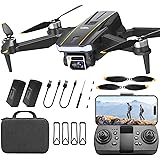
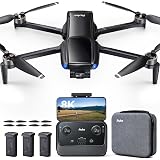
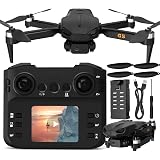
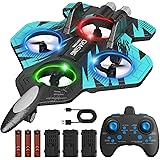
Have you ever watched an FPV drone zip through the air, performing incredible acrobatics or weaving through tight spaces, and wondered how such a nimble machine is put together? If so, you’re not alone! These first-person view (FPV) drones offer an immersive piloting experience unlike traditional camera drones, largely due to their unique construction and the synergy of their many specialized components. While the video above provides an excellent visual introduction to the essential parts of an FPV drone, this accompanying article aims to dive deeper, offering additional context and technical insights to further demystify these fascinating flying machines.
What Exactly Makes an FPV Drone Different?
An FPV drone distinguishes itself by putting the pilot directly “in the cockpit,” or rather, seeing what the drone sees through a camera transmitted to a set of goggles. This immediate, first-person perspective allows for unparalleled control and responsiveness, making them ideal for high-speed racing, freestyle acrobatics, and dynamic cinematic shots. Unlike a standard consumer drone, which often relies on GPS stabilization and automated flight modes, FPV drones demand a higher degree of manual input, often described as more akin to piloting a remote-controlled aircraft rather than operating a flying camera platform.
The manual nature of FPV flying is precisely what unlocks its potential for such acrobatic and precise movements. It is a system built for agility and speed, designed to react instantaneously to the pilot’s every command, making the connection between pilot and machine incredibly direct and engaging.
The Foundation: Understanding Your FPV Drone Frame
The frame of an FPV drone is accurately depicted as its skeleton, providing the structural integrity for all other components. Frames are not one-size-fits-all; instead, they are chosen based on the drone’s intended purpose and the size of its propellers.
- Materials Matter: Most larger FPV drones, especially those for freestyle or racing, are constructed from durable carbon fiber. This material is prized for its excellent strength-to-weight ratio, which is crucial for surviving impacts and maintaining performance. Smaller drones, particularly those designed for indoor flight or with protective ducts, might utilize plastic or a composite material to achieve a lighter weight and absorb softer bumps.
- Size and Purpose: Frame sizes are typically measured by the maximum propeller size they can accommodate. For instance, a “5-inch frame” is designed for 5-inch propellers, a common choice for outdoor freestyle flying. Smaller frames, such as a 2.5-inch or “toothpick” frame, are optimized for smaller propellers and lighter builds, often for more constrained environments. Alternatively, frames can also be measured by the motor-to-motor distance, often called the wheelbase.
- Mounting Patterns: A critical consideration for any FPV drone builder is the internal mounting pattern for electronic components. Standard patterns include 30x30mm for larger stacks, 20x20mm for more compact builds, and 26x26mm (or “whoop” style) for micro drones. Ensuring your flight controller and ESC stack match the frame’s mounting holes is a foundational step in any FPV drone build.
The Brain: Your Flight Controller (FC)
The flight controller (FC) functions as the central nervous system of your FPV drone, interpreting your commands and stabilizing the aircraft. It is a sophisticated circuit board packed with sensors and a powerful microprocessor.
- Sensory Input: The FC is equipped with gyroscopes and accelerometers, which continuously monitor the drone’s orientation and movement in three-dimensional space. These sensors provide critical feedback, allowing the FC to make rapid adjustments to keep the drone stable and responsive.
- Processing Power: Microprocessors like the F4, F7, or even newer H7 chips are at the heart of the FC. An F7 processor, for example, offers significantly faster processing speeds compared to an F4, which translates to a more refined flight experience, lower latency, and the ability to run more complex filtering algorithms and flight control software. This processing capability is essential for managing the high-frequency data streams from the sensors and executing precise motor commands.
- Configuration: Connecting the FC to a computer via a micro-USB or USB-C port is an essential step. This connection allows pilots to flash firmware (like Betaflight, EmuFlight, or Kiss) and configure a myriad of settings—from PID (Proportional-Integral-Derivative) tuning for flight characteristics to setting up auxiliary modes and OSD (On-Screen Display) elements. It is where the drone’s personality is truly defined.
The Muscles: Electronic Speed Controllers (ESCs)
Electronic Speed Controllers (ESCs) are the drone’s muscles, acting as the crucial interface between the flight controller and the motors. They translate the FC’s digital signals into the precise electrical pulses required to spin the brushless motors at varying speeds and directions.
-
Individual vs. 4-in-1: ESCs come in two primary configurations for FPV drones: individual ESCs (one for each motor) or a 4-in-1 ESC board.
- Individual ESCs: These are mounted on each arm, directly adjacent to the motor. While they might result in a slightly less ‘clean’ build with more wiring, they offer the advantage of easier replacement if a single ESC fails, often at a lower individual cost. This is a favored option for “basher” drones, where hard crashes are anticipated.
- 4-in-1 ESCs: These integrate four individual ESCs onto a single board, which is typically stacked with the flight controller in the center of the frame. This configuration leads to much cleaner wiring, reduced weight, and a more compact build. However, a failure in one of the four ESCs on the board necessitates replacing the entire unit, which can be more expensive.
- Firmware and Capabilities: Modern ESCs often run on 32-bit processors with firmware like BLHeli32 or Kiss, offering advanced features over older 8-bit BLHeli_S firmware. These advancements include faster communication protocols (like DShot), active braking for quicker motor response, telemetry for real-time data back to the FC, and even customizable startup tones or “music.”
- Voltage Ratings: It is paramount to match your ESC’s voltage rating to your battery’s ‘S’ rating. An ESC rated for 2S-4S batteries will be irreparably damaged if a 6S battery is connected, highlighting the importance of component compatibility in your FPV drone build.
The Powerhouse: Motors and Propellers
Motors and propellers are the direct means by which an FPV drone generates thrust and achieves flight. They are intimately connected, with each component’s choice influencing the other.
- Brushless Motors: The standard for virtually all FPV drones, brushless motors are highly efficient, powerful, and durable. Unlike brushed motors (typically found in very small, inexpensive micro drones), brushless motors can change their spin direction rapidly, which is crucial for FPV drone acrobatics and stability. They are rated by their size (e.g., 2207) and their KV rating.
- KV Rating Explained: The KV rating of a motor indicates how many revolutions per minute (RPM) it will theoretically achieve per volt applied, without a load. Higher KV motors spin faster but generate less torque, making them suitable for smaller propellers and faster, less efficient flight. Lower KV motors spin slower but produce more torque, ideal for larger propellers, higher voltage (e.g., 6S batteries), and more efficient, longer-range cruising. Matching the KV to your chosen battery voltage and propeller size is key to optimal performance.
-
Propellers: These are available in a variety of sizes, blade counts, and pitches.
- Size: Directly related to your frame size (e.g., 5-inch props for a 5-inch frame).
- Blade Count: Bi-blade props are generally more efficient for long-range flying, while tri-blade (3-blade) and quad-blade (4-blade) props offer more thrust and control for freestyle and racing, often at the expense of efficiency. Five-blade props are common on cinewhoops for smooth, stable video.
- Pitch: The “pitch” refers to the angle of the propeller blade and determines how much air is moved per revolution. Higher pitch props generate more thrust but require more power, while lower pitch props are typically more efficient.
The Senses: Video Transmitter (VTX) and Camera
For an FPV drone, the camera and video transmitter (VTX) act as its eyes, providing the critical visual feedback to the pilot through their goggles.
-
Analog vs. Digital FPV: This is a fundamental choice impacting video quality and latency.
- Analog VTX: These are generally smaller, lighter, and more affordable. They transmit video with virtually zero latency, which is highly valued in racing for immediate responsiveness. However, their resolution is lower (akin to VHS quality) and video signal degradation can be significant in challenging environments. Analog cameras typically connect directly to the VTX, which then sends the signal to the flight controller for OSD integration.
- Digital VTX: Systems like DJI FPV, Caddx Vista, or Walksnail Avatar offer dramatically higher resolution (HD) video feeds, providing a much clearer and more immersive experience. While latency has been significantly reduced in modern digital systems, it is still generally higher than analog. Digital systems are also typically more expensive, larger, and heavier. A digital camera connects directly to the digital VTX unit, which in turn connects to the flight controller.
- Power Output: Most VTXs offer selectable power outputs, measured in milliwatts (mW), ranging from 25mW for close-range flying (and adherence to local regulations) to 1000mW (1 watt) for long-range flights or penetrating obstacles.
- Smart Audio/Tramp: For analog systems, protocols like Smart Audio or Tramp allow the pilot to change VTX settings (channel, band, power) directly from their FPV goggles via the OSD menu, simplifying field adjustments.
- Camera Sizes: FPV cameras come in various sizes—Full (28mm), Mini (21mm), and Micro (19mm)—to fit different frames. The smaller the camera, the easier it is to integrate into compact FPV drone builds.
The Communication Link: Your Receiver (RX)
The receiver (RX) is the vital component that establishes the wireless link between your pilot’s radio controller and the FPV drone. It interprets your stick commands and translates them into signals for the flight controller.
-
Frequency Bands: In regions like the US, common frequencies for FPV drone control are 2.4 GHz and 900 MHz.
- 2.4 GHz: These receivers are popular for their compact size, lower latency, and suitability for freestyle or racing at closer to medium ranges.
- 900 MHz: Systems operating on the 900 MHz band, such as TBS Crossfire or ExpressLRS (ELRS), are favored for long-range flying due to their superior signal penetration and reliability over greater distances.
- Protocols: Various radio protocols dictate how the receiver communicates with your controller. Popular options include FrSky ACCST/ACCESS, Crossfire, Ghost, and ELRS. Choosing a receiver means selecting one compatible with your specific radio controller’s protocol. For example, if your controller is running ELRS firmware, an ELRS-compatible receiver is essential.
- Connection to FC: All receivers connect directly to the flight controller, typically using specific UART (Universal Asynchronous Receiver-Transmitter) pads like RX/TX or an S.Bus pad, depending on the protocol used. This configuration is critical for the FC to receive pilot inputs correctly.
Beyond the Essentials: Other Vital FPV Drone Components
While the frame, FC, ESCs, motors, props, VTX, camera, and receiver form the core of any FPV drone, several other components enhance functionality, safety, and customization:
- Battery: The power source, almost exclusively Lithium Polymer (LiPo) batteries. Their ‘S’ rating (e.g., 4S, 6S) indicates the number of cells in series, directly affecting voltage and power output. The C-rating indicates discharge rate, crucial for providing sufficient current to high-power motors.
- 3D Printed Parts: An indispensable part of the FPV hobby. 3D printing allows for custom GoPro mounts, antenna protectors, arm bumpers, landing skids, and many other functional and aesthetic enhancements. They enable personalization and provide crucial protection against crashes.
- LEDs: Not just for aesthetics, LEDs can indicate drone status (armed/disarmed), aid in orientation during line-of-sight flying, or even be used for racing identification. Many flight controllers offer dedicated LED pads and control through firmware.
- Beeper: A small but powerful accessory, often integrated with an LED. A beeper is invaluable for locating a downed FPV drone in tall grass, dense brush, or after a long-range crash. Many models are self-powered, meaning they can still beep even if the main battery is disconnected.
- GPS: Primarily for long-range FPV drones, a GPS module allows for displaying coordinates on the OSD, setting a “return to home” fail-safe point (though not typically for autonomous FPV flight), and generally enhances situational awareness over vast distances.
- Battery Straps: Simple yet critical, these velcro straps securely fasten the battery to the drone’s frame, preventing it from detaching during aggressive maneuvers or crashes. Available in various sizes to match different battery packs and frames.
Ready for Takeoff? Your FPV Drone Questions Answered
What is an FPV drone?
An FPV (First-Person View) drone offers an immersive piloting experience by transmitting video from its onboard camera directly to the pilot’s goggles. This allows pilots to see exactly what the drone sees, enabling precise control for racing and acrobatics.
What does the Flight Controller (FC) do?
The Flight Controller (FC) is the ‘brain’ of the FPV drone. It interprets your commands from the radio, uses sensors to understand the drone’s orientation, and stabilizes the aircraft by sending signals to the motors.
What is the role of the Electronic Speed Controllers (ESCs)?
Electronic Speed Controllers (ESCs) are the drone’s ‘muscles.’ They translate the Flight Controller’s signals into precise electrical pulses that power and control the speed and direction of each motor.
How do FPV drone pilots see what the drone sees?
Pilots see through the FPV drone’s camera via a Video Transmitter (VTX), which sends the live video feed wirelessly. This signal is then received by the pilot’s FPV goggles, creating the first-person view.
What is the drone frame used for?
The drone frame is like the skeleton of the FPV drone. It provides the structural support and mounting points for all the other components, chosen based on the drone’s intended purpose and propeller size.