Choosing the right unmanned aerial vehicle (UAV) for commercial operations is a critical decision that directly impacts efficiency, data quality, and return on investment. As explored in the accompanying video, the primary contenders are the versatile multi-rotor drones and the high-endurance fixed-wing and Vertical Takeoff and Landing (VTOL) platforms. Each type offers distinct advantages tailored to specific mission profiles, making an informed selection paramount for professionals in industries such as surveying, inspection, agriculture, and public safety.
Understanding Multi-Rotor Drones: Precision and Maneuverability
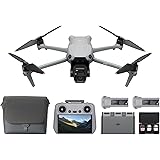
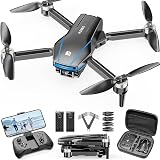
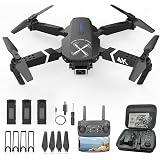
Multi-rotor drones, often the first image that comes to mind when thinking of UAVs, are defined by their multiple propellers – typically four (quadcopters), six (hexacopters), or eight (octocopters). Less common but highly effective are coaxial configurations, where two propellers are stacked on a single motor, enhancing thrust and redundancy. These designs grant multi-rotors exceptional stability and maneuverability, especially in challenging environments or high-wind conditions, as highlighted in the video. Their ability to hover precisely, ascend rapidly, and stop on a dime makes them indispensable for detailed, close-proximity tasks.
The inherent design of multi-rotors, with their individual motors and sophisticated flight controllers, allows them to maintain position with remarkable accuracy. This precision is invaluable for specific applications such as infrastructure inspection, where operators might need to get extremely close to bridges, power lines, communication towers, or wind turbines. The agility to navigate complex structures and capture high-resolution imagery or thermal data from various angles is a key differentiator. Furthermore, the rapid deployment times and user-friendly interfaces, exemplified by platforms like DJI, significantly reduce operational friction and training requirements for flight teams.
However, the stability and control of multi-rotors come with an inherent trade-off in flight duration. All motors constantly generate thrust to counteract gravity, demanding substantial power. Consequently, typical multi-rotor flight times, as mentioned, range from 30 to 50 minutes, depending on battery capacity, payload, and environmental factors. While this duration is ample for many detailed inspection or small-area mapping tasks, it can become a limiting factor for larger projects requiring extensive coverage or prolonged aerial surveillance.
Fixed-Wing and VTOL UAVs: Covering More Ground with Efficiency
In contrast to multi-rotors, fixed-wing drones operate more like traditional aircraft, generating lift from their wings as they move forward. This aerodynamic efficiency means their motors work primarily to propel them through the air, rather than constantly fighting gravity. The result is significantly longer flight times and the ability to cover vast areas far more efficiently than any multi-rotor platform, often achieving three to four times the coverage, as noted in the video.
The emergence of VTOL (Vertical Takeoff and Landing) fixed-wing drones represents a significant leap, combining the best attributes of both worlds. A VTOL system, such as the Dragonfish, integrates multi-rotor capabilities for vertical ascent and descent with the extended endurance of a fixed-wing design. This hybrid approach eliminates the need for runways or launch catapults, allowing operators to deploy from confined spaces, sometimes as compact as a 40×40-foot area. Once airborne and clear of obstacles, the aircraft transitions seamlessly into forward flight, leveraging its wings for energy-efficient travel. This capability makes VTOLs particularly appealing for diverse missions that require both broad area coverage and flexible deployment from challenging locations.
The extended flight times and coverage capabilities of fixed-wing and VTOL drones make them ideal for large-scale operations. These include extensive topographic mapping, corridor mapping for pipelines and power lines, precision agriculture over vast fields, environmental monitoring, and large-area security surveillance. Their capacity to carry heavier payloads for longer durations also enables the integration of more advanced or multiple sensors, such as LiDAR or specialized hyperspectral cameras, which may be crucial for detailed data collection across expansive territories.
Operational Considerations: Beyond the Hype
Mapping and Data Acquisition
When it comes to mapping, the choice between drone types directly influences the quality and resolution of the data. Multi-rotors, flying at lower altitudes and slower speeds, excel at capturing ultra-high-resolution imagery, resulting in a lower Ground Sample Distance (GSD). This is crucial for creating highly detailed 2D orthomosaics and accurate 3D models of specific assets or smaller sites, often leveraging advanced photogrammetry software. Their ability to orbit points of interest also provides comprehensive volumetric data for construction or mining applications.
Fixed-wing drones, designed for speed and altitude, are superior for rapid data acquisition over large areas. While they typically operate at higher altitudes, leading to a higher GSD, their efficiency dramatically reduces the time required for data collection on expansive projects. Modern sensors and advanced flight planning software, however, allow operators to optimize parameters to achieve remarkably good results even with the constraints of faster flight. VTOL drones offer a unique hybrid advantage, allowing for initial high-altitude, wide-area surveys followed by detailed, low-altitude inspection of specific features without changing platforms.
Safety and Regulatory Compliance
Regardless of the platform, stringent safety protocols and adherence to regulatory frameworks are non-negotiable. Both multi-rotors and fixed-wings come equipped with sophisticated safety features like return-to-home functions, obstacle avoidance sensors, and pre-flight self-check systems that alert operators to potential issues. However, the pilot’s role remains paramount. Thorough pre-flight checks, meticulous flight planning considering airspace restrictions, weather conditions (especially wind speeds and gusts), and contingency planning for emergencies are essential. For commercial operations in regions like the United States, compliance with regulations such as FAA Part 107 is mandatory, requiring certified pilots to operate UAVs safely and legally.
Payload and Sensor Integration
The mission often dictates the required payload, which in turn influences the optimal drone platform. Multi-rotors generally offer more flexibility for integrating a variety of sensors for specific tasks due to their stable hover and capacity for close-range data capture. This includes high-resolution RGB cameras, thermal sensors for inspections, multispectral sensors for agricultural analysis, and even small LiDAR units for precision mapping in confined spaces. Fixed-wing and VTOL platforms, with their higher lift capacity and extended flight times, can accommodate larger and more power-intensive payloads, such as full-size LiDAR scanners or sophisticated hyperspectral imaging systems, critical for comprehensive large-area data collection.
Cost of Ownership and ROI
The initial investment for a commercial drone varies widely, but it’s crucial to consider the total cost of ownership (TCO) and potential return on investment (ROI). This encompasses not just the drone’s purchase price but also sensor costs, software licenses, maintenance, spare parts, insurance, and pilot training. While multi-rotors may have a lower entry point, a fleet of them might be needed to cover the same area as a single fixed-wing or VTOL. Conversely, the higher initial cost of an advanced fixed-wing or VTOL system can be justified by its superior efficiency in covering vast areas, reducing field time, and accelerating data acquisition for large-scale projects, ultimately leading to greater profitability.
Making the Right Choice: Tailoring UAVs to Missions
Ultimately, the “best” drone—be it a multi-rotor, fixed-wing, or VTOL—is entirely dependent on the specific mission requirements and operational environment. For detailed inspections, confined space operations, or rapid deployment for precise data capture over smaller areas, the agility and stability of a multi-rotor drone are unmatched. For expansive surveys, large-scale mapping, or applications demanding extended flight endurance, a fixed-wing UAV or a VTOL system offers superior efficiency and coverage.
Professionals must meticulously evaluate factors such as the required data resolution, the size and complexity of the operational area, environmental conditions, payload needs, budget constraints, and regulatory considerations. Sometimes, a multi-platform strategy, deploying both types of commercial drones, provides the most comprehensive solution, leveraging the strengths of each system for different stages or aspects of a project.
Cleared for Takeoff: Your Drone Choice Questions Answered
What is a multi-rotor drone?
Multi-rotor drones are defined by having multiple propellers, often four, six, or eight. They are known for their exceptional stability and maneuverability, which makes them ideal for detailed, close-proximity tasks.
What is a fixed-wing drone?
Fixed-wing drones operate much like traditional airplanes, generating lift from their wings as they move forward. This design allows them to achieve significantly longer flight times and cover vast areas more efficiently than multi-rotor drones.
What is a VTOL drone?
VTOL stands for Vertical Takeoff and Landing. These are hybrid drones that combine the vertical ascent and descent capabilities of multi-rotors with the extended endurance of fixed-wing designs, eliminating the need for runways.
When should I choose a multi-rotor drone instead of a fixed-wing or VTOL drone?
Multi-rotor drones are best for detailed inspections, operating in confined spaces, or rapid deployment for precise data capture over smaller areas due to their agility. Fixed-wing and VTOL drones are better for expansive surveys or large-scale mapping projects that demand extended flight endurance and coverage.