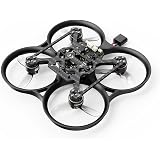
The accompanying video provides a visual exploration of a custom built 10-inch tricopter. This advanced aerial platform represents a convergence of intricate engineering and meticulous design. We will delve into the critical technical considerations required for developing such sophisticated drone systems.
Understanding the 10-Inch Tricopter Platform
A tricopter employs three motors for propulsion. Its unique configuration offers distinct advantages. Yaw control is achieved via a tilting rear motor. This design simplifies mechanical complexity compared to quadcopters.
Furthermore, tricopters exhibit particular flight dynamics. Their longer arms often accommodate larger propellers. This enhances efficiency during flight operations.
Frame Design and Material Science
Structural rigidity is paramount in tricopter construction. The frame must withstand dynamic flight forces. Weight distribution significantly impacts flight stability.
Carbon fiber is a preferred material choice. It offers an excellent strength-to-weight ratio. G10 fiberglass is also utilized for its durability. Careful vibration dampening strategies are essential. These mitigate sensor noise and improve flight performance.
Propulsion System Optimization
Optimizing the propulsion system is critical. It directly influences thrust, efficiency, and flight duration. Each component demands precise selection.
Motor Selection: KV Rating and Torque
Motor KV rating dictates RPM per volt. A lower KV motor generally provides more torque. This is advantageous for larger propellers. Optimal motor size ensures sufficient thrust output. Efficiency directly correlates with flight time.
Propeller Dynamics: Pitch and Diameter
Ten-inch propellers offer significant air displacement. Their pitch defines the theoretical distance traveled per rotation. Blade count and profile affect thrust and efficiency. Selecting the correct propeller is crucial for performance. It balances lift requirements with power consumption.
Electronic Speed Controllers (ESCs): Firmware and Protocols
ESCs precisely regulate motor speed. Modern ESCs run advanced firmware, such as BLHeli_32. This enables rapid motor response. Communication protocols like DShot offer high-speed, digital signals. They reduce latency and improve flight controller accuracy.
Advanced Flight Control Systems
The flight controller acts as the drone’s brain. Its capabilities define the tricopter’s flight characteristics. Precision is key for stable and agile operation.
Flight Controller Hardware: Processing Power
Choosing a flight controller requires careful evaluation. High processing power handles complex algorithms. Integrated sensor suites provide critical flight data. Gyroscopes and accelerometers ensure orientation stability.
PID Tuning: Achieving Stability and Responsiveness
PID tuning adjusts proportional, integral, and derivative gains. These parameters control how the drone responds to errors. Correct tuning results in stable, responsive flight. It is an iterative and precise process.
Yaw Mechanism: Servo Integration
Tricopters achieve yaw by tilting the rear motor. A high-quality servo is integral to this mechanism. It must offer precise and rapid response. Servo horn integrity is also critical for reliability.
Power Distribution and Battery Management
An efficient power system sustains flight. It supplies consistent power to all components. Proper management maximizes both performance and safety.
Battery Chemistry: LiPo Cell Count
Lithium Polymer (LiPo) batteries are standard. Their cell count determines the system voltage. Capacity is measured in milliampere-hours (mAh). The C-rating indicates discharge capabilities.
Power Distribution Boards (PDBs): Current Handling
PDBs distribute power from the battery. They provide clean power to ESCs and the flight controller. Proper current handling is essential. Integrated voltage regulators can supply stable 5V and 12V outputs.
Aerodynamics and Flight Performance
Aerodynamic principles significantly influence a tricopter’s flight envelope. Thoughtful design can enhance speed, efficiency, and maneuverability. Minimizing drag is a constant design objective.
Thrust-to-Weight Ratio: Performance Metrics
A high thrust-to-weight ratio dictates agility. It allows for aggressive maneuvers and rapid acceleration. This metric is also crucial for payload capacity. Optimal balance maximizes flight envelope versatility.
Aerodynamic Drag: Minimizing Resistance
Component placement affects overall drag. Streamlining the frame reduces air resistance. Exposed wiring creates unnecessary drag. Careful component integration improves aerodynamic efficiency. This leads to longer flight times for custom built 10-inch tricopters.
Building Answers: Custom Tricopter & Drone Queries
What is a tricopter?
A tricopter is a type of drone that uses three motors for propulsion. It achieves yaw control, which is rotating left or right, by tilting its rear motor.
What materials are commonly used to build a tricopter frame?
Carbon fiber is often used due to its excellent strength-to-weight ratio, and G10 fiberglass is also utilized for its durability. These materials ensure the frame is strong enough for flight.
What is the function of a flight controller in a drone?
The flight controller acts as the drone’s brain, processing information and managing algorithms to ensure stable and agile flight. It uses sensors like gyroscopes to maintain orientation.
What kind of batteries are typically used for tricopters?
Tricopters commonly use Lithium Polymer (LiPo) batteries, which are standard for their efficient power delivery. The battery’s cell count determines the system voltage for the drone.