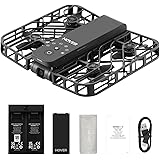
Building your own quadcopter, or drone, can be an incredibly rewarding endeavor, offering a unique blend of electronics, engineering, and aerial photography. While many ready-to-fly drones are available today, constructing a custom machine provides unparalleled control over performance, payload capacity, and flight characteristics. This hands-on approach allows for a deeper understanding of how these complex aerial vehicles operate, from fundamental component interaction to advanced flight dynamics.
The journey into DIY drone building often begins with a critical decision-making process: selecting the right components. As highlighted in the accompanying video, choosing each part meticulously can significantly impact your drone’s efficiency, stability, and overall flight time. This comprehensive guide will expand upon the video’s insights, delving deeper into the nuances of component selection and optimization, ensuring your first build is both successful and performs optimally.
Embarking on Your DIY Drone Building Journey
The motivation to build a custom drone often stems from a desire to surpass the limitations of commercial, off-the-shelf models. Many commercially available drones, particularly at the entry-level price point, offer limited flight times, often around five minutes, which can feel restrictive for capturing compelling aerial footage or executing complex maneuvers. Furthermore, their integrated cameras might not meet the quality standards desired by serious hobbyists or aspiring aerial cinematographers.
A significant advantage of building your own drone is the inherent modularity it offers. This design philosophy enables users to swap out different payload sections, such as various camera gimbals or specialized sensors, transforming the drone’s capabilities without needing an entirely new unit. This flexibility extends to upgrading individual components like motors or batteries, directly addressing performance bottlenecks like short flight times. By understanding and selecting each component, builders gain a robust platform for continuous improvement and specialization.
Understanding Key Drone Components
At its core, a quadcopter relies on several interconnected components to achieve stable, controlled flight. The video provides an excellent overview, but a deeper dive into each element reveals critical considerations for successful component selection. From the foundational frame to the intelligent flight controller, each part plays a vital role in the drone’s functionality.
Selecting the Right Quadcopter Frame
The frame is essentially the chassis of your drone, providing the structural integrity to mount all other components. The video features a cost-effective copy of a DJI Flamewheel F330 frame, retailing for approximately \$16, including landing gear. Such affordability makes it an excellent choice for first-time builders, as potential crashes are less financially impactful.
Frame sizes, typically expressed in millimeters (e.g., 330mm or 250mm), refer to the diagonal distance between motor centers. A larger frame, like the 330mm mentioned, often allows for more efficient motor performance and greater payload capacity due to longer arm lengths. While 3D printing frames offers customization, it’s generally not recommended for a beginner’s first build due to potential strength limitations and vulnerability to breakage, as demonstrated by the video’s example of a broken propeller guard.
Beyond size, frame materials vary widely, impacting weight, durability, and cost. Common materials include plastic (cheap, flexible, good for beginners), fiberglass (stronger, slightly heavier), and carbon fiber (lightweight, extremely rigid, but more expensive). For those starting out, a basic, readily available frame offers the best balance of cost and repairability.
Drive Section: Motors, ESCs, and Propellers
The drive section is responsible for generating the thrust needed for flight, comprising brushless DC motors, electronic speed controllers (ESCs), and propellers.
Brushless DC Motors
Brushless DC motors are the workhorses of modern drones, offering high efficiency and power output. These motors are specified by their KV rating, which indicates the theoretical Revolutions Per Minute (RPM) per volt supplied to the motor without a load. For instance, a 1900 KV motor will spin at approximately 1900 RPM for every volt applied.
Higher KV motors generally spin faster and are more efficient with smaller propellers, typically found in smaller, more agile drones like racing quads. Conversely, lower KV motors are better suited for larger propellers, providing more torque for larger, heavier quadcopters designed for carrying payloads or achieving longer flight times. It is critical to select motors that align with your chosen frame size and propeller dimensions for optimal efficiency.
Furthermore, motors often come with specific threading for propeller nuts, designated as clockwise (CW) or counter-clockwise (CCW). This refers to the thread direction, ensuring the propeller nut tightens against the motor’s rotation. A quadcopter typically requires two CW and two CCW motors to prevent nuts from loosening during flight.
Electronic Speed Controllers (ESCs)
ESCs act as the intermediary between the flight controller and the motors, converting the flight controller’s signals into precise power delivery to each motor. The most crucial specification for an ESC is its continuous current rating, measured in amperes (amps). This rating must exceed the maximum current expected to be drawn by the motor during peak operation, including bursts.
An 18-amp continuous rating, as shown in the video, is common for many hobby-grade drones. Overlooking this specification can lead to ESC overheating and failure, potentially resulting in a crash. Additionally, ESCs have a voltage rating, typically specified in terms of the number of Lithium Polymer (LiPo) cells they can handle in series (e.g., 2S to 4S), which must match your chosen battery pack. Some ESCs include a Battery Eliminator Circuit (BEC) to provide 5V power to other components, though a separate voltage regulator is often preferred for enhanced reliability and reduced electromagnetic interference.
Propellers
Propellers are the blades that translate motor rotation into thrust. They are primarily defined by two measurements: diameter and pitch, both usually specified in inches. An 8×3.8 propeller, for example, has an 8-inch diameter and a 3.8-inch pitch. The diameter relates to the overall size of the propeller, while the pitch dictates how far the propeller would theoretically advance in one full rotation through a semi-rigid medium.
Just like motors, propellers come in right-hand (RH) and left-hand (LH) versions, and you cannot simply flip them over to change their direction. A quadcopter requires two RH and two LH propellers to generate opposing thrust for stable flight and maneuverability. The selection of propeller diameter and pitch is intrinsically linked to motor KV and battery voltage; these components must be chosen in harmony to achieve desired flight characteristics such as speed, lift, and efficiency.
Powering Your Build: Drone Batteries
Batteries are the lifeblood of your drone, supplying the necessary power for all electronic components. Lithium Polymer (LiPo) batteries are almost exclusively used in drones due to their high energy density and discharge rates. Understanding their specifications is paramount for safety and performance.
The voltage of a LiPo battery pack is determined by the number of individual cells connected in series, often denoted by an ‘S’ rating (e.g., 3S, 4S). Each LiPo cell has a nominal voltage of 3.7 volts, meaning a 3S pack is approximately 11.1 volts, and a 4S pack is 14.8 volts. Higher voltage packs generally allow for higher power output and are often used in larger, more powerful drones.
Battery capacity is measured in milliamp hours (mAh) or amp hours (Ah). A 16,000 mAh (16 Ah) battery, as demonstrated, can deliver 16 amps for one hour before depletion. The total energy stored, measured in watt-hours, is calculated by multiplying the voltage by the amp-hour capacity. While impressive, a large LiPo battery holds significant energy, comparable to a stick of dynamite, emphasizing the need for careful handling and charging practices.
The C-rate indicates the maximum continuous discharge current a battery can safely provide relative to its capacity. A 10C rating on a 16 Ah battery means it can continuously discharge at 160 amps (10 x 16A). While this rating determines available power, for optimal battery health, it’s advisable to limit discharge to approximately 90% of the battery’s total capacity, leaving 10% remaining to prevent irreversible damage.
Finally, the physical placement and weight of the battery significantly influence the drone’s center of gravity (CG). A high CG, or one that is off-center, can make the drone less stable and more challenging for the flight controller to manage, especially during aggressive maneuvers. Strategically mounting the battery to achieve a low and central CG is crucial for stable flight.
Navigating the Skies: Flight Controllers and Radio Systems
These components are the brains and the communication link of your quadcopter, translating your commands into precise flight maneuvers.
Flight Controller
The flight controller (FC) is the central processing unit of your drone. It interprets signals from the radio receiver, processes data from onboard sensors (gyroscopes, accelerometers, barometers), and sends precise commands to the ESCs to control motor speeds. This constant feedback loop allows the drone to maintain stability, execute maneuvers, and compensate for external forces like wind.
The CC3D flight controller featured in the video is a solid choice for beginners. It offers essential functionality without overwhelming complexity, making it ideal for learning the basics of drone operation. More advanced flight controllers, often running open-source firmware like Betaflight or ArduPilot, integrate additional features such as GPS for autonomous flight, on-screen display (OSD) for real-time flight data, and telemetry for remote monitoring, but these add layers of configuration that might be daunting for a first-time builder.
Radio System (Transmitter & Receiver)
The radio system provides the critical link between the pilot and the drone. It consists of a handheld transmitter (remote control) and a receiver mounted on the drone. The FlySky FS-T6, mentioned in the video, is an example of an inexpensive yet functional radio system suitable for beginners. While more advanced and costly radio systems offer greater range, lower latency, and more customizable features, a basic 6-channel system is often sufficient for initial flight training and simple operations.
When selecting a radio system, ensure that the receiver is compatible with your flight controller’s input protocols (e.g., PPM, SBUS, DSMX). Also, consider the ergonomics of the transmitter, as comfort during extended flight sessions can greatly enhance the piloting experience. Familiarity with radio channels and their corresponding drone controls (throttle, roll, pitch, yaw) is fundamental to safely operating your quadcopter.
Optimizing Your Drone’s Performance with Numerical Modeling
Once individual components are understood, the next crucial step is ensuring they work together harmoniously to achieve desired performance metrics. This is where numerical modeling tools, such as the Xcopter calculator available on Ecalc.ch, become invaluable. As demonstrated in the video, these calculators allow builders to simulate different component configurations and predict outcomes like hover flight time, thrust-to-weight ratio, and current draw, all before spending a single dollar on parts.
The video illustrates a powerful example of optimization: an initial design using existing 12-amp ESCs and 2300 KV motors with 6-inch propellers yielded an estimated hover flight time of 13 minutes. However, by strategically changing to 1900 KV motors and larger 8-inch propellers, while keeping the battery and frame constant, the predicted flight time dramatically increased to over 20 minutes. This significant improvement of approximately 7 minutes highlights the profound impact of component synergy.
When using such a calculator, accurate data input is critical. Key parameters include the drone’s weight without the drive components (motors, ESCs, propellers, battery), frame size, battery specifications (cell count, capacity, C-rate, weight per cell), and detailed motor and propeller data (KV, dimensions, pitch). The calculator then processes these inputs to provide comprehensive performance predictions, allowing builders to iteratively refine their component choices. This simulation-driven approach minimizes trial-and-error in the physical build phase, saving time and resources. It emphasizes that a lower KV motor combined with a larger propeller often leads to higher efficiency for hovering and longer flight times, making it ideal for aerial video platforms where stability and endurance are prized over raw speed.