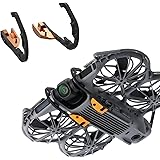
The recent demonstration featuring STM’s BOYGA Autonomous Multi-Rotor UAV with a mortar payload hitting its target accurately, as seen in the accompanying video, highlights significant advancements in defense technology. This sophisticated unmanned aerial vehicle (UAV) showcases the increasing capability of autonomous systems to perform precision strikes. The BOYGA system represents a convergence of several cutting-edge technologies, offering a glimpse into the future of modern warfare and tactical operations.
What is the STM BOYGA Autonomous Multi-Rotor UAV?
The STM BOYGA is an advanced autonomous multi-rotor unmanned aerial vehicle designed for critical military applications. Manufactured by STM, a prominent Turkish defense technology company, this UAV is engineered to carry and deploy a mortar payload with exceptional precision. Its multi-rotor design allows for vertical take-off and landing (VTOL), providing operational flexibility in various challenging terrains and environments. This platform is specifically developed to extend reconnaissance capabilities and engage targets effectively from a distance.
Unlike traditional fixed-wing drones, multi-rotor UAVs are known for their ability to hover, maneuver in tight spaces, and maintain stable flight, which is crucial for accurate targeting. The integration of a mortar payload transforms the BOYGA into a powerful strike asset. Such systems are often deployed to provide close air support or to eliminate high-value targets where conventional ground forces might face increased risks.
The Autonomy Advantage: Precision and Efficiency
A central feature of the STM BOYGA is its autonomous operational capability. This means the drone can execute complex missions with minimal human intervention once a mission profile is programmed. Autonomous systems are designed to navigate, identify targets, and engage them using sophisticated onboard intelligence. This reduces the cognitive load on human operators, allowing them to oversee multiple assets or focus on strategic decision-making.
The autonomy of the BOYGA UAV contributes directly to its ability to achieve accurate hits on target. Advanced flight control algorithms and real-time data processing ensure stable flight even in adverse conditions. Furthermore, target acquisition and tracking systems are often enhanced through artificial intelligence, allowing the drone to identify and lock onto specified targets with remarkable precision. Such a high degree of autonomy is considered a hallmark of next-generation defense platforms.
Integrating Mortar Payloads for Precision Strike
The decision to equip the BOYGA UAV with a mortar payload signifies a critical shift in how drones are utilized in defense scenarios. Mortars are typically indirect fire weapons, known for their ability to deliver explosive ordnance over obstacles and inflict damage in a wider area. Integrating such a weapon onto a multi-rotor drone combines the maneuverability and observational capabilities of a UAV with the destructive power of a mortar.
This combination allows for rapid response to emergent threats and engagement of targets that might be inaccessible to other weapon systems. The ability to deploy a mortar from an airborne, autonomous platform adds a layer of flexibility and strategic advantage. Missions involving precision engagement are greatly enhanced by this integration, offering a new dimension to tactical planning and execution.
Achieving Accurate Hits on Target
The demonstrated accurate hit on target by the STM BOYGA UAV is a testament to its advanced targeting and guidance systems. Achieving such precision with a mortar, especially from an aerial platform, involves several complex technological elements. These include high-resolution optical or thermal cameras for target identification, laser designators for pinpoint accuracy, and sophisticated flight stabilization systems.
Precise trajectory calculations are made possible by onboard computers that account for factors like wind speed, drone movement, and target location. The mortar round’s flight path is carefully managed to ensure it reaches the designated impact point effectively. This level of accuracy minimizes collateral damage and ensures mission objectives are met efficiently, making the BOYGA a highly effective system for focused engagements.
Core Technologies Powering the BOYGA System
Behind the impressive performance of the STM BOYGA UAV are several core technologies that work in concert. Robust communication links, often encrypted, are essential for maintaining control and receiving telemetry data from the drone. These links ensure that the system can operate reliably, even in contested electronic environments. Secure data transmission is paramount for mission success and operational integrity.
Advanced navigation systems, including GPS and inertial measurement units (IMUs), allow the drone to maintain its position and orientation with extreme accuracy. These systems are crucial for autonomous flight and for positioning the payload precisely before deployment. Additionally, counter-jamming and anti-spoofing capabilities are often integrated into such defense drones to protect against electronic warfare threats, ensuring the UAV remains operational.
The Evolving Landscape of Drone Warfare
The development of systems like the STM BOYGA Autonomous Multi-Rotor UAV underscores the rapidly evolving landscape of drone warfare. UAVs are no longer merely reconnaissance tools; they have become integral parts of offensive and defensive strategies. The integration of weapon payloads, particularly those offering precision strike capabilities, demonstrates a move towards more potent and versatile aerial platforms. This advancement provides armed forces with new options for intelligence gathering, target engagement, and force protection.
Modern defense doctrines are increasingly incorporating autonomous systems to enhance operational effectiveness and reduce risks to human personnel. The future of military engagement will undoubtedly be shaped by these technologies, with continuous innovation pushing the boundaries of what unmanned systems can achieve. The STM BOYGA stands as a powerful example of this ongoing transformation, demonstrating advanced capabilities in autonomous multi-rotor UAV design.
Hitting the Mark: Your Questions on BOYGA’s Autonomous Mortar UAV
What is the STM BOYGA UAV?
The STM BOYGA is an advanced autonomous multi-rotor unmanned aerial vehicle designed for military use. It is engineered to carry and deploy a mortar payload with exceptional precision.
What does “autonomous” mean for the BOYGA drone?
Autonomous means the drone can perform complex missions, such as navigating, identifying, and engaging targets, with minimal human intervention. It relies on sophisticated onboard intelligence to operate.
Why is it significant that the BOYGA carries a mortar payload?
Equipping the BOYGA with a mortar payload combines the drone’s maneuverability and observation capabilities with the destructive power of a mortar. This allows for rapid response and engagement of targets that might be difficult for other systems to reach.
How does the STM BOYGA achieve accurate hits on target?
It uses advanced technologies like high-resolution cameras, laser designators, and sophisticated flight stabilization systems for precise targeting. Onboard computers calculate the mortar’s trajectory to ensure it hits the designated impact point effectively.