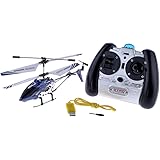
Have you ever watched a single-motor drone like the one in the video above and wondered how it defies gravity and maintains stability with seemingly so few components? The whirring sound of a propeller spinning, as heard in the accompanying video, often belies the sophisticated engineering at play in these unique aerial vehicles. Unlike their more common multi-rotor counterparts, single-motor drones, especially those powered by a 1BLDC motor, present a fascinating challenge in design and control. This distinctive approach to drone architecture offers both intriguing advantages and demanding hurdles, making them a compelling subject for hobbyists and engineers alike. Understanding the mechanics behind a single-motor drone allows for a deeper appreciation of innovative rotorcraft design.
Exploring Single-Motor Drone Design and Operation
The concept of a single-motor drone is, at its heart, a miniaturized homage to traditional helicopters. Instead of relying on multiple rotors to manage lift and direction, these devices achieve flight using primarily one main rotor for thrust, much like a conventional helicopter. However, this simplification introduces immediate complexities, most notably the management of reaction torque. When a single BLDC motor spins a propeller, an equal and opposite torque is exerted on the drone’s body, which would ordinarily cause the entire craft to spin uncontrollably in the opposite direction. This fundamental principle of physics necessitates clever engineering solutions to maintain stability.
Typically, there are a few primary methods employed to counteract this torque. One common solution involves a tail rotor, positioned perpendicular to the main rotor’s axis, which generates a thrust force to push against the main rotor’s rotational tendency. Alternatively, some designs use a ducted fan or vectoring thrust mechanisms, where the single main propeller’s airflow can be redirected to provide yaw control. These designs often prioritize efficiency in certain flight envelopes or aim for a more compact footprint, making them suitable for specialized applications where size and power consumption are critical considerations. The elegance of achieving stable flight with minimal propulsion units is a testament to meticulous aerodynamic and control system integration.
The Power of BLDC Motors in Drones
At the core of many modern drone designs, including the sophisticated single-motor drone, lies the Brushless DC (BLDC) motor. These motors are a cornerstone of efficiency and performance in aerial vehicles due to several key characteristics. Unlike traditional brushed motors, BLDC motors operate without physical brushes, significantly reducing friction and wear, which translates to a longer lifespan and less maintenance. Moreover, their electronic commutation allows for extremely precise control over speed and torque, crucial for the nuanced adjustments needed in drone flight.
In a single BLDC motor drone, the motor’s power output directly dictates the lift and, in many cases, heavily influences the overall flight dynamics. The electronic speed controller (ESC), a vital component, modulates the power delivered to the BLDC motor, enabling precise RPM adjustments. This precision is not just about making the propeller spin; it’s about providing the exact amount of thrust required for hovering, climbing, descending, and responding to environmental factors. The high power-to-weight ratio of BLDC motors is particularly advantageous for drones, as every gram saved contributes to improved flight time and maneuverability. Consequently, the selection and tuning of the BLDC motor and its accompanying ESC are paramount for the performance of a single-motor drone.
Overcoming Single-Rotor Flight Stability Challenges
Achieving stable and controllable flight with a single main rotor presents a distinct set of engineering challenges. Beyond the aforementioned torque reaction, gyroscopic precession from the large, spinning main rotor can introduce unexpected forces during maneuvers. For instance, if the drone pitches forward, the gyroscopic effect might cause it to roll sideways instead, requiring a sophisticated flight controller to compensate in real-time. This interplay of forces demands a robust control system that can interpret pilot inputs or autonomous commands and translate them into precise adjustments of the rotor speed and, if present, the tail rotor’s thrust or cyclic pitch. The control logic for a single-motor drone is inherently more complex than that of a multi-rotor system, which can simply vary the speed of individual propellers for control.
Flight controllers designed for single-rotor systems typically incorporate advanced sensor fusion algorithms, combining data from accelerometers, gyroscopes, and magnetometers to maintain orientation. Furthermore, maintaining balance is a continuous active process, as even slight shifts in the center of gravity can drastically impact stability. In contrast to multi-rotor drones that leverage differential thrust for direct control over all axes, single-motor drones often rely on more intricate mechanical linkages or aerodynamic surfaces to achieve similar levels of agility. The ongoing development in flight control algorithms continues to push the boundaries of what is possible with these elegantly challenging designs, making them increasingly viable for various applications.
Applications and Future Potential of Single-Motor Drones
While multi-rotor drones dominate the commercial and hobby markets for their ease of control, single-motor drone designs hold a specialized niche. Their inherent mechanical simplicity, fewer moving parts (excluding the control surfaces), and potentially higher aerodynamic efficiency in forward flight can make them appealing for certain applications. For example, in scenarios where endurance and payload capacity are prioritized over extreme maneuverability, a well-designed single-motor drone could outperform a multi-rotor equivalent. Their streamlined profile might also be advantageous for operating in confined spaces or for applications requiring minimal aerodynamic drag.
Consider potential uses in environmental monitoring, where a long flight time to cover vast areas is critical, or in specific industrial inspections where a compact form factor is beneficial. The continuous innovation in materials science and miniaturized electronics further enhances their potential, allowing for lighter, stronger, and more energy-dense designs. As research into advanced control algorithms progresses, the stability and ease of operation of these intricate flying machines will undoubtedly improve, paving the way for wider adoption. The future of the single-motor drone, powered by sophisticated 1BLDC motors, promises continued evolution, pushing the boundaries of what a single propeller can achieve in the world of unmanned aerial vehicles.
From Chopper to BLDC Drone: Your Questions Answered
What is a single-motor drone?
A single-motor drone is an aerial vehicle that uses one main propeller for lift and thrust, similar to a traditional helicopter. It differs from most drones which use multiple rotors for control.
How do single-motor drones manage to stay stable?
To stay stable, single-motor drones use clever engineering solutions to counteract the spinning force (torque) from their main propeller. This often involves a tail rotor or redirecting the main propeller’s airflow for control.
Why are BLDC motors used in single-motor drones?
BLDC (Brushless DC) motors are used because they are very efficient, durable, and offer precise control over speed and power. This precision and high power-to-weight ratio are crucial for the drone’s stable flight and maneuverability.
What are some benefits of using a single-motor drone design?
Single-motor drones can have simpler mechanics, fewer moving parts, and potentially higher aerodynamic efficiency for certain tasks. They are often good for applications prioritizing long flight times, payload capacity, or compact design.