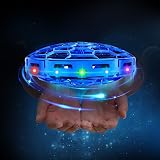
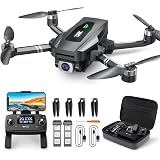
The accompanying video provides a compelling visual demonstration of the Flowerfly singlecopter drone in action, showcasing its unique flight characteristics and innovative design. This post will delve deeper into the fascinating world of singlecopter technology, exploring the engineering marvels and significant potential that such an innovative drone platform presents.
Understanding the Singlecopter Drone: A Unique Aerial Platform
Traditional drones typically feature multiple rotors—quadcopters, hexacopters, and octocopters dominate the market due to their inherent stability and relatively straightforward control mechanisms. However, the Flowerfly singlecopter drone represents a departure from this convention, embracing a design philosophy that prioritizes efficiency and a smaller mechanical footprint. This class of unmanned aerial vehicles (UAVs) relies on a single main rotor for lift and propulsion, a concept that immediately brings to mind full-scale helicopters, but miniaturized and adapted for autonomous operation.
The ingenuity behind a single-rotor design lies in its potential for greater aerodynamic efficiency. Imagine if a conventional multi-rotor drone could achieve similar lift with fewer moving parts, consuming less power and potentially extending flight times. This is the promise of the singlecopter. By consolidating propulsion into one primary rotor, engineers aim to minimize parasitic drag and optimize the aerodynamic performance of the entire system. This can lead to a more streamlined and agile platform, especially for specific tasks where space or energy consumption is a critical factor.
The Engineering Marvel of Single-Rotor Flight
Achieving stable flight with a single main rotor presents significant engineering challenges. Unlike multi-rotor systems, which balance lift and torque simply by adjusting individual motor speeds, a singlecopter must employ sophisticated mechanisms to counteract the torque generated by its sole rotor. Moreover, maintaining pitch and roll stability requires precise control over the rotor’s thrust vector or through auxiliary means.
Typically, there are several methods employed to achieve this:
- Tail Rotor System: Similar to traditional helicopters, a smaller rotor positioned perpendicularly to the main rotor provides anti-torque and yaw control.
- Cyclic Pitch Control: This advanced mechanism allows the pitch of the main rotor blades to change dynamically during each rotation, enabling directional thrust for pitch and roll control, along with anti-torque.
- Thrust Vectoring: Some designs might incorporate movable vanes or reaction jets that redirect the airflow from the main rotor or generate opposing thrust.
The Flowerfly singlecopter drone, observed in flight, likely employs a clever combination of these principles, demonstrating a highly refined control system. The intricate dance of aerodynamics and digital control systems is what allows these unique aircraft to maintain their poise and perform complex maneuvers, making singlecopter drones a fascinating subject of ongoing research and development in aerial robotics.
Advantages of the Singlecopter Architecture
Despite the inherent complexities in their design and control, singlecopter drones offer several compelling advantages over their multi-rotor counterparts. These benefits open doors to specialized applications where traditional drone designs may fall short.
Enhanced Efficiency and Endurance Potential
A primary advantage of a single, larger rotor is its potential for greater aerodynamic efficiency. Larger rotors operate at lower RPMs for the same amount of thrust, often leading to reduced energy consumption and quieter operation. Consequently, a singlecopter drone could potentially achieve longer flight times or carry heavier payloads relative to its power input, making it an attractive option for missions requiring extended surveillance or remote delivery.
Consider the scenario of long-range environmental monitoring. Imagine if a singlecopter drone could survey vast agricultural fields or remote ecological sites for hours on end, collecting critical data without frequent recharges. This extended endurance could revolutionize data collection in hard-to-reach or expansive areas, offering substantial operational cost savings and increased data fidelity.
Agility and Maneuverability in Confined Spaces
With a more compact overall footprint and often a simpler airframe, singlecopter drones can exhibit superior agility. Their ability to vector thrust precisely allows for swift changes in direction and position, which can be crucial in challenging environments. This maneuverability makes the Flowerfly singlecopter drone an ideal candidate for tasks requiring intricate navigation.
Picture a specialized inspection drone. Imagine if a singlecopter drone could navigate the narrow confines of industrial pipelines, inspect the interior of complex bridge structures, or perform detailed examinations within power plant facilities where multi-rotor drones might struggle with clearance. This capability could significantly enhance safety and efficiency in critical infrastructure maintenance and inspection, providing access to previously inaccessible areas.
Simplified Mechanical Complexity (Relative to Helicopters)
While more complex than a basic quadcopter, a singlecopter drone can still be simpler mechanically than a full-sized helicopter. Miniaturization allows for the use of advanced lightweight materials and integrated electronics that simplify the overall design. This translates to fewer components that could fail and potentially easier maintenance in the long run, reducing operational overhead.
Future Applications of Singlecopter Drones
The unique characteristics of the Flowerfly singlecopter drone and similar designs point towards a future where these specialized UAVs play a critical role in niche applications. Their ability to combine efficiency with precise control makes them suitable for tasks demanding specific operational parameters.
Potential applications include:
- Industrial Inspection: Inspecting wind turbines, power lines, large industrial facilities, and even the internal structures of buildings or confined spaces where multi-rotor drones are too large or unwieldy.
- Specialized Delivery: Transporting small, critical items in urban environments or delivering supplies to remote, inaccessible locations where ground transport is difficult.
- Environmental Monitoring: Long-duration flights for air quality sampling, wildlife tracking in dense forests, or monitoring changes in remote geographical features without disturbing the environment.
- Defense and Surveillance: Covert reconnaissance missions, specialized border patrol, or operating in environments where a low acoustic signature and small physical footprint are advantageous.
- Research and Development: Serving as platforms for advanced aerodynamics research, testing new control algorithms, or developing novel sensor integration techniques in the academic and private sectors.
As drone technology continues to evolve, the engineering principles behind the Flowerfly singlecopter drone will undoubtedly inspire new generations of aerial robots. The ongoing innovation in flight dynamics and material science promises to make these highly specialized aircraft even more capable and versatile in the years to come.
Unspinning Your Flowerfly Singlecopter Queries
What is a singlecopter drone?
A singlecopter drone is a type of unmanned aerial vehicle (UAV) that uses only one main rotor for both lift and forward movement. This design is different from most common drones that have multiple rotors.
How is a singlecopter drone different from most other drones?
Most drones, such as quadcopters, use multiple rotors for stability and control. A singlecopter drone, however, relies on a single main rotor, aiming for greater efficiency and a more compact design.
How does a singlecopter drone stay stable in the air with only one rotor?
To maintain stability, singlecopter drones use advanced engineering methods like a tail rotor system, cyclic pitch control, or thrust vectoring. These mechanisms help counteract the torque from the main rotor and control movement.
What are the main advantages of using a singlecopter drone?
Singlecopter drones offer several advantages, including potentially greater aerodynamic efficiency for longer flight times and enhanced agility, making them ideal for navigating confined or challenging spaces.