Many individuals delving into the world of remotely piloted aircraft systems (RPAS) often find the learning curve steeper than anticipated, particularly when transitioning from traditional RC helicopters. As highlighted in the accompanying video, the inherent challenges of single-rotor helicopter flight can quickly transform a recreational pursuit into a graveyard of spare parts. Fortunately, the evolution of drone technology, particularly the widespread adoption of multi-rotor drones, has dramatically simplified flight operations, making aerial platforms more accessible, stable, and incredibly versatile for both hobbyists and sophisticated commercial applications.
The frustration articulated by the interviewer in the video resonates with anyone who has grappled with the complex mechanics and unforgiving control demands of single-rotor RC helicopters. These machines require constant, precise stick input to maintain stability, a skill honed over countless hours of practice. In contrast, modern multi-rotor UAVs, especially commercial-grade systems, offer a level of stability and ease of flight that fundamentally transforms the piloting experience. They are engineered to minimize the pilot’s workload, allowing for greater focus on mission objectives rather than merely keeping the craft airborne.
The Inherent Stability of Multi-Rotor Drone Systems
The fundamental difference between single-rotor RC helicopters and multi-rotor drone systems lies in their design philosophy and reliance on advanced flight control algorithms. A traditional RC helicopter achieves lift and control through a complex swashplate mechanism, variable pitch blades, and a tail rotor to counteract torque. This intricate dance of mechanical components demands continuous, nuanced adjustments from the pilot to prevent instability, making them notoriously difficult to master. Any momentary lapse in concentration or an imprecise input can lead to rapid destabilization and an inevitable crash.
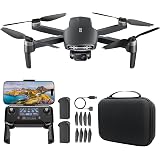
Multi-rotor drones, by contrast, leverage multiple fixed-pitch propellers (typically four, six, or eight) whose individual motor speeds are continuously adjusted by an on-board flight controller. This sophisticated electronic brain, equipped with an Inertial Measurement Unit (IMU), gyroscopes, accelerometers, and often a Global Positioning System (GPS) module, constantly monitors the drone’s attitude, altitude, and position. When a pilot issues a command, or if the drone detects an external force like wind, the flight controller dynamically alters the thrust from each propeller to maintain stability or execute the desired maneuver. For instance, to move forward, the rear motors might speed up while the front motors slow down, tilting the entire platform.
Advanced Flight Controllers and Autonomous Capabilities
The intelligence embedded within a multi-rotor’s flight controller is the true game-changer. Unlike the “active on the sticks” requirement of home-built or minimalist RC drones, commercial systems from manufacturers like DJI offer highly stabilized flight modes. In these modes, the drone actively assists the pilot, often holding its position and altitude automatically when the sticks are released. This capability, mentioned by Spencer Krause in the video, is invaluable; it provides a crucial safety net and allows pilots time to plan their next move, compose a shot, or assess a complex inspection target without the immediate threat of a runaway aircraft. It’s akin to having an invisible co-pilot constantly correcting for drift and maintaining a steady hover.
Furthermore, many commercial multi-rotor platforms come equipped with a suite of sensors including downward-facing vision systems, ultrasonic sensors, and obstacle avoidance technology. These systems provide enhanced positional accuracy indoors or in GPS-denied environments and allow the drone to sense and react to its surroundings, further minimizing pilot error and enhancing operational safety. The ability to program complex flight paths and execute autonomous missions means that for many tasks, the pilot’s role shifts from manual control to mission supervision and data acquisition.
Multi-Rotor Drones: The Backbone of Commercial Operations
The inherent stability and advanced flight capabilities of multi-rotor drones make them indispensable tools across a wide array of industries. Their precision control and ability to hover steadily in place are critical for capturing high-quality data. For instance, in aerial inspections, whether of infrastructure like bridges and power lines, or assets such as wind turbines and solar panels, a stable platform is paramount for clear imagery and accurate defect identification. The absence of vibrations and the ability to maintain a consistent distance from the subject ensures data integrity, which is vital for analysis and reporting.
Beyond inspections, multi-rotor UAVs are extensively utilized in fields such as precision agriculture for crop health monitoring, surveying and mapping for generating detailed 3D models and orthomosaic maps, real estate for compelling aerial photography and videography, and even in public safety for search and rescue operations or incident management. Their vertical take-off and landing (VTOL) capabilities and relatively small footprint make them ideal for deployment in confined spaces or areas lacking traditional runways, enhancing operational flexibility significantly.
Navigating Insurance for Professional Drone Operations
The discussion in the video about insurance for expensive inspection drones touches upon a critical aspect of commercial drone operations. While one might intuitively assume that pilot skill would be a primary factor in insurance premiums, the reality for commercial drone insurance is often more nuanced. Insurers typically focus on the value of the drone itself, the type of operations being conducted, the regulatory compliance of the operator (e.g., FAA Part 107 certification in the U.S.), the liability coverage desired, and the overall risk profile of the business rather than subjective assessments of individual pilot aptitude.
Most commercial drone insurance policies are designed to cover hull damage (damage to the drone itself) and third-party liability (damage to property or injury to persons caused by the drone). Training certifications and adherence to standard operating procedures (SOPs) are crucial for demonstrating professionalism and often factor into an insurer’s willingness to provide coverage and determine pricing. However, proving an individual pilot’s raw “skill” in the way one might for a manned aircraft pilot is less common. Instead, the focus is on documented training, compliance with regulations, and the robust safety features inherent in the multi-rotor drones themselves, which significantly mitigate operational risks compared to less stable platforms.
Ultimately, the widespread adoption and continuous innovation in multi-rotor drones have democratized aerial access. Their superior stability, ease of control, and increasingly sophisticated autonomous features not only make them more enjoyable for recreational pilots but also indispensable for a growing number of commercial applications, driving efficiency and opening new possibilities across various industries.
Multi-Rotor Mastery: Your Questions Answered
What is the main difference between multi-rotor drones and single-rotor RC helicopters?
Multi-rotor drones use multiple propellers and advanced electronics to stay stable and are easier to fly. Single-rotor RC helicopters rely on complex mechanical parts and require constant, precise pilot input to remain stable.
Why are multi-rotor drones easier for beginners to fly?
Multi-rotor drones have an on-board flight controller with sensors that automatically adjust motor speeds to maintain stability. This reduces the pilot’s workload, allowing them to focus more on their objectives rather than just keeping the drone airborne.
How do multi-rotor drones maintain stability in the air?
They use an advanced flight controller equipped with sensors like gyroscopes and accelerometers, which constantly monitors the drone’s position. This system dynamically alters the thrust from each propeller to keep the drone steady or execute desired maneuvers.
Do multi-rotor drones have any automatic flying features?
Yes, many multi-rotor drones offer highly stabilized flight modes where the drone can automatically hold its position and altitude. Some also include obstacle avoidance and the ability to execute autonomous missions, further simplifying operations.