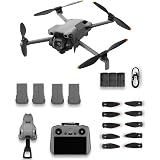
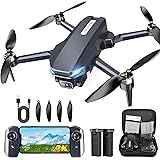
The intricate world of custom quadcopter construction often presents significant hurdles. Enthusiasts are frequently daunted by component compatibility or complex integration steps. However, a structured approach simplifies this engineering challenge. The accompanying video offers a compelling visual demonstration of drone assembly. This article complements that visual guide, providing expert insights into building a high-performance quadcopter at home. Detailed technical specifications and advanced considerations are explored.
Quadcopter Design: The Foundational Elements
Successful quadcopter construction begins with meticulous component selection. Each part impacts the drone’s overall performance envelope. Suboptimal choices invariably compromise flight stability and endurance. Conversely, informed decisions yield a robust, agile aerial platform.
Frame Architectures and Material Science
The frame forms the quadcopter’s skeletal structure. Carbon fiber frames are widely preferred for their strength-to-weight ratio. Aluminum frames offer durability but incur a weight penalty. Frame size is dictated by propeller diameter and motor spacing. X-frames and H-frames present distinct flight characteristics. An X-frame typically offers superior maneuverability. However, an H-frame can accommodate larger payloads or cameras.
Motor Dynamics and ESC Integration
Brushless motors provide the necessary thrust. Their KV rating specifies revolutions per minute per volt. Higher KV motors suit smaller propellers and higher RPMs. Lower KV motors drive larger propellers efficiently. Electronic Speed Controllers (ESCs) regulate motor speed. Each motor requires a dedicated ESC. Imagine if an ESC’s amperage rating is insufficient; catastrophic failure often results. BLHeli_32 firmware is often preferred for its advanced features.
Flight Controller Significance
The flight controller (FC) acts as the drone’s brain. It processes sensor data and issues commands to the ESCs. Popular FCs utilize firmware like Betaflight, ArduPilot, or INAV. These platforms offer extensive configuration options. An Inertial Measurement Unit (IMU) sensor provides critical attitude data. Proper FC selection is paramount for stable flight. Many modern FCs integrate a barometer and OSD (On-Screen Display).
Propeller Mechanics and Aerodynamic Efficiency
Propellers translate motor rotation into lift. Pitch and diameter are crucial aerodynamic parameters. A higher pitch generates more thrust but requires more power. Propeller material also influences durability and weight. Carbon fiber props are rigid and efficient. Conversely, plastic props are more forgiving during crashes. Balanced propellers are essential for minimizing vibrations. Unbalanced props can degrade flight controller performance.
Power System Considerations: Batteries and PDBs
Lithium Polymer (LiPo) batteries are the industry standard. Their cell count (e.g., 3S, 4S, 6S) determines voltage output. The C-rating indicates discharge rate capability. An inadequate C-rating can damage the battery. A Power Distribution Board (PDB) distributes power from the battery. Some flight controllers integrate PDB functionality. Voltage regulators ensure stable power for sensitive electronics.
Radio Control Systems and Telemetry
A reliable radio link is indispensable. A transmitter sends control signals to a receiver on the quadcopter. Protocols like SBUS, IBUS, or Crossfire are commonly utilized. These digital links offer robust signal integrity. Telemetry features relay drone data back to the pilot. This includes battery voltage, signal strength, or GPS coordinates. Long-range systems are favored for FPV (First Person View) applications.
Assembly Protocol: Precision Engineering
The physical assembly of your custom quadcopter demands precision. Sloppy construction can lead to intermittent failures. Conversely, meticulous work ensures reliability. The mechanical integration of components sets the stage for electrical systems.
Structural Integration and Dampening
Motors are securely fastened to the frame arms. Vibration dampening might be necessary for the flight controller. Rubber standoffs or foam pads are typically employed. This isolates the FC from motor-induced oscillations. The flight controller is mounted centrally for optimal balance. Proper weight distribution is crucial for flight stability. Uneven weight causes undesirable yaw or roll tendencies.
Wiring Topologies and Connection Integrity
ESC-to-motor wiring is critical. Correct motor rotation direction must be observed. Signal wires connect ESCs to the flight controller. Power wires connect ESCs and the FC to the PDB/battery. Solder joints must be clean and robust. Cold solder joints introduce electrical resistance. This can cause motor desynchronization or power fluctuations. Heat shrink tubing insulates exposed connections. Wire routing should be neat and secured. This prevents wires from interfering with propellers.
Sensor Calibration and Environmental Awareness
The flight controller’s sensors require calibration. Accelerometer calibration establishes a level reference. Magnetometer calibration corrects for magnetic interference. This ensures accurate heading information. GPS modules, if present, need a clear sky for satellite acquisition. Compass calibration should be performed away from metal objects. Incorrect calibration results in drift or erratic flight behavior.
Firmware and Initial Setup: The Digital Core
Once assembled, the quadcopter’s intelligence is established through firmware. This software dictates its flight characteristics. Expert configuration unlocks the drone’s full potential.
Flight Controller Software and Configuration
The selected firmware is flashed to the flight controller. Betaflight Configurator or Mission Planner are common tools. Initial setup involves port configuration and sensor assignment. Receiver protocols are selected (e.g., Serial-based RX). Flight modes are assigned to transmitter switches. Arming and disarming procedures are configured. Safety features like failsafe are paramount. A properly configured failsafe prevents a flyaway drone.
PID Tuning Fundamentals and Loop Optimization
PID (Proportional, Integral, Derivative) tuning is crucial for stable flight. These values determine how the quadcopter responds to disturbances. ‘P’ controls the immediate correction force. ‘I’ corrects for long-term errors or drift. ‘D’ dampens oscillations during corrections. Default PID values are often a starting point. Fine-tuning is typically performed through test flights. Overly aggressive P-gains cause oscillations. Conversely, low P-gains result in a sloppy drone. Advanced filtering techniques further refine flight performance.
Telemetry Implementation and Real-time Data
Telemetry provides vital flight information in real-time. Battery voltage, current draw, and RSSI (Received Signal Strength Indicator) are common data points. This information is displayed on an OSD or transmitter screen. Pilots monitor these metrics to prevent system overloads. Low voltage warnings prevent battery damage. Critical data enhances situational awareness. Real-time feedback empowers the pilot.
Flight Dynamics and Advanced Considerations
After initial setup, understanding flight dynamics refines the drone’s capabilities. Test flights provide invaluable feedback for optimization. Troubleshooting skills are also essential for sustained operation of a DIY quadcopter.
Aerodynamic Principles in Multirotor Flight
The lift generated by propellers counteracts gravity. Thrust vectors are manipulated for movement. Tilting the quadcopter changes the thrust direction. This results in forward, backward, or sideways motion. Yaw is achieved by differentially spinning motors. An understanding of aerodynamic forces optimizes control. Efficient flight minimizes energy consumption. Airflow over propellers generates complex vortex patterns.
Flight Testing Protocols and Iterative Refinement
Initial flights should occur in a controlled environment. A clear, open space is ideal. Start with basic hovering tests. Observe flight stability and responsiveness. Adjust PID values incrementally. Document all changes and their effects. This iterative process optimizes flight characteristics. Record flight times and battery consumption. Analyze motor temperatures post-flight. Overheating motors indicate stress or imbalance.
Troubleshooting Methodologies for System Integrity
Issues often arise during the building and testing phases. Diagnostic tools include a multimeter for continuity checks. Blackbox logs from the flight controller record flight data. These logs are invaluable for identifying intermittent issues. Motor desyncs, unexpected flips, or power loss are common problems. Check all wiring connections meticulously. Verify component functionality systematically. Persistent issues might necessitate component replacement. Building a robust quadcopter demands problem-solving acumen.
Your Quadcopter Questions: Cleared for Takeoff!
What are the main parts needed to build a quadcopter?
You’ll need a frame, motors, propellers, Electronic Speed Controllers (ESCs), a flight controller, a battery, and a radio control system. These components work together to make the drone fly.
What is the purpose of the flight controller?
The flight controller is the ‘brain’ of the drone. It processes information from sensors and sends commands to the motors, ensuring stable and controlled flight.
Why is the quadcopter frame important?
The frame is the main structure that holds all the components. Its material and design affect the drone’s strength, weight, and maneuverability.
What kind of batteries are typically used for quadcopters?
Lithium Polymer (LiPo) batteries are the industry standard for quadcopters. Their ‘cell count’ determines the voltage, and the ‘C-rating’ shows how fast they can deliver power.