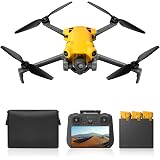
The world of unmanned aerial vehicles (UAVs), commonly known as drones, consistently pushes boundaries. As highlighted in the accompanying video, a significant challenge for commercially available drones remains their flight duration. Most models can typically sustain flight for a mere 8 to 20 minutes on average. This limitation has historically constrained their practical applications, especially for long-distance tasks.
However, innovators are rapidly changing this narrative. The groundbreaking achievement of the first multirotor drone to successfully cross the English Channel represents a monumental leap forward. This isn’t just about breaking a record; it’s a profound proof of concept demonstrating that drones are capable of much more than previously imagined, setting a new benchmark for drone endurance.
Redefining Drone Endurance: The English Channel Crossing
The first multirotor drone crossing of the English Channel is more than a historical footnote; it signifies a pivotal moment in aviation history. This ambitious flight shattered conventional expectations surrounding drone capabilities, particularly for multirotor designs. It proved that these agile aircraft could reliably traverse significant distances, overcoming the inherent challenges of aerial endurance.
1. **A New Standard for Flight Time:** This feat fundamentally resets the record for what’s achievable with multirotor drone technology. It moves beyond the typical short flights, showcasing a drone engineered for sustained operation over water. The drone’s ability to complete such a journey reliably underscores a new era of longer operational windows for commercial and industrial applications.
2. **Verification and Credibility:** The British Model Flying Association (BMFA) played a crucial role in verifying this historic crossing. Their involvement adds an essential layer of credibility and official recognition to the achievement. This independent verification ensures the record stands as a legitimate and recognized milestone in unmanned aviation.
3. **Overcoming Environmental Challenges:** The English Channel presents its own unique set of environmental factors, including variable weather, strong winds, and the expansive open water. Successfully navigating these conditions demands exceptional drone design, robust flight control systems, and precise navigation, making the drone crossing even more remarkable.
The Technological Edge: Powering Long-Distance Drone Flight
Achieving such an unprecedented long-distance drone flight requires a synergy of cutting-edge technologies. The team behind this record-breaking multirotor pushed the boundaries in several key areas, creating a drone engineered for optimal performance and efficiency. This commitment to innovation is what enables drones to overcome previous limitations.
Advanced Materials and Aerodynamics for Multi-Rotor Drones
The structural integrity and weight of a drone are paramount for extended flight. For this English Channel drone crossing, the reliance on carbon fiber structures was a critical factor. Carbon fiber is renowned for its exceptional strength-to-weight ratio, allowing for a robust yet incredibly light airframe.
Furthermore, aerodynamic design played a vital role. Minimizing drag through sleek component integration and efficient chassis design directly contributes to reduced energy consumption. Every gram of weight saved and every ounce of drag reduced translates into precious minutes of extended flight time, making the journey across the Channel feasible.
Battery Breakthroughs and Power Management
Battery technology stands as the most significant hurdle for drone endurance. The record-setting drone utilized the latest battery technology, likely high-density lithium-ion (Li-ion) or lithium-polymer (LiPo) cells, which offer maximum energy storage in a compact form factor. These advanced batteries provide the sustained power necessary for extended operations.
Beyond raw battery capacity, sophisticated power management systems are equally crucial. These systems optimize energy draw, monitor battery health, and efficiently distribute power to all drone components. Intelligent energy management ensures every watt-hour of stored energy is utilized with maximum efficiency, preventing premature power drain.
Optimized Motors and Propeller Systems
The efficiency of a drone’s propulsion system directly impacts its flight duration. The latest motors, designed for high thrust-to-weight ratios and minimal energy consumption, are essential for long-distance missions. These motors convert electrical energy into mechanical thrust with impressive efficiency, reducing waste heat and extending battery life.
Complementing advanced motors are optimized propellers. Propeller design is a complex science, balancing factors like pitch, diameter, and blade shape to achieve maximum lift and thrust with the least amount of energy. Custom-designed or highly efficient off-the-shelf propellers contribute significantly to the overall aerodynamic efficiency and endurance of the long-distance drone flight.
Beyond the Record: Implications for Future Drone Applications
While the English Channel drone crossing is a remarkable achievement in itself, its true importance lies in the implications for future drone activities. This proof of concept unlocks a vast array of possibilities, transforming how industries perceive and utilize unmanned aerial vehicles. The success validates the potential for drones to operate reliably over long distances and extended durations.
Revolutionizing Drone Delivery and Logistics
The most immediate and talked-about application is the future of drone delivery. The ability to reliably transport parcels and goods over significant distances opens new avenues for logistics companies. Imagine faster, more efficient delivery of urgent medical supplies to remote areas or packages to rural customers, bypassing congested road networks.
This long-distance drone capability is not limited to small parcels. It extends to inspecting critical infrastructure like pipelines, power lines, and expansive agricultural fields more efficiently. Drones can cover vast areas with sensor payloads, collecting data that would be costly and time-consuming for human teams to acquire, thereby enhancing operational efficiency and safety in various sectors.
Overcoming Operational Hurdles: Reliability and BVLOS
The English Channel drone crossing serves as a testament to the increasing reliability of advanced drone systems. For widespread commercial adoption, drones must demonstrate consistent performance, even in challenging environments. This flight validates the robust engineering and flight control systems required for such critical missions.
Moreover, it accelerates the development and acceptance of Beyond Visual Line of Sight (BVLOS) operations. Flying drones where the operator cannot visually see the aircraft is crucial for long-distance applications. The Channel crossing provides compelling data for regulators and developers, paving the way for safer and more integrated BVLOS operations in national airspace.
Regulatory Considerations and Public Acceptance
While technology progresses rapidly, regulatory frameworks often lag. The success of such a significant drone crossing will undoubtedly influence regulatory bodies to develop clearer guidelines for long-distance and BVLOS flights. This achievement demonstrates the maturity of drone technology, encouraging a more forward-thinking approach to drone integration into shared airspace.
Public acceptance is another vital aspect. Demonstrating reliable and safe long-distance drone operations can help build trust and address concerns about drone safety and privacy. This record-breaking flight contributes positively to the public perception of drones as valuable tools for various commercial and humanitarian purposes.
The first multirotor drone crossing of the English Channel is a pivotal moment, fundamentally reshaping our understanding of drone endurance and capability. It is a critical foundational step for the widespread adoption of long-distance drone flight, proving that the future of aerial logistics and innovation is indeed here.
Charting the Skies: Your Questions on the Historic Channel Quad-copter
What historic flight is discussed in the article?
The article discusses the groundbreaking achievement of the first multirotor drone successfully crossing the English Channel, setting a new record for drone endurance.
Why is this drone crossing considered a big advancement?
Most commercial drones can only fly for 8 to 20 minutes. This crossing is a major advancement because it proves multirotor drones can fly much longer distances, overcoming previous limitations.
What kind of technologies helped the drone fly so far?
The drone used cutting-edge technologies like lightweight carbon fiber materials for its structure, advanced high-density batteries with smart power management, and optimized motors and propellers for efficiency.
How might this long-distance drone technology be used in the future?
This technology could revolutionize drone delivery and logistics, allowing for faster transport of goods over significant distances. It also opens doors for more efficient inspection of large infrastructures like pipelines and power lines.